Soccer Player Analytic Dashboard
Overview
Team Lead
Senior Capstone Class
Figma
My Roles
Team Members
Tools
Client
As team lead for my senior capstone, I partnered with the Bradley University Men’s Soccer to design a data visualization platform for comparing players across D1 programs. We transformed complex, Python-based datasets into intuitive visuals, like interactive radar charts and field maps, so coaches could quickly interpret performance without relying on raw stats. I led the design direction, ensuring accuracy, clarity, and functional usability across all visualizations.
As team lead for my senior capstone, I partnered with the Bradley University Men’s Soccer to design a data visualization platform for comparing players across D1 programs. We transformed complex, Python-based datasets into intuitive visuals, like interactive radar charts and field maps, so coaches could quickly interpret performance without relying on raw stats. I led the design direction, ensuring accuracy, clarity, and functional usability across all visualizations.
Bradley University D1 Soccer Team
My Roles
Team Lead
Team Members
Senior Capstone Class
Tools
Figma
Client
Bradley University D1 Soccer Team
Research
Main Problem
Personas
Competitive Anaylsis
Interviews & Surveys
Tools like Wyscout separate data and video, making performance harder to interpret. They rely on raw stats and lack efficient comparison across players, teams, and seasons. This limits coaches’ ability to quickly make informed decisions.
We created multiple personas to capture the full range of user needs and technical abilities. Each group interacts with data differently, from high-level decision-making to deep analysis and personal performance tracking.
Plotting the Path
We analyzed platforms like Wyscout and StatsBomb to identify strengths, weaknesses, and patterns. We found most tools favor either depth or usability, rarely both. This led us to design a solution that balances powerful analytics with clarity and simplicity.
We analyzed platforms like Wyscout and StatsBomb to identify strengths, weaknesses, and patterns. We found most tools favor either depth or usability, rarely both. This led us to design a solution that balances powerful analytics with clarity and simplicity.
We gathered direct insights from coaches and players through interviews and surveys to understand real-world workflows and preferences. Coaches emphasized the need for visual comparisons like radar charts, while players preferred simple, table-based data views. This validated design directions and ensured the product reflects actual user behavior,
not assumptions.
Table of metrics for players
This UX journey follows the path from our project plan to clear direction through ideation, flows, and inspiration. Ready to keep going?
View the UX Journey
We gathered direct insights from coaches and players through interviews and surveys to understand real-world workflows and preferences. Coaches emphasized the need for visual comparisons like radar charts, while players preferred simple, table-based data views. This validated design directions and ensured the product reflects actual user behavior, not assumptions.
Table of metrics for players
See it all in Figma
Want to view the first place wireframes? Click the button below to be taken to the design file!
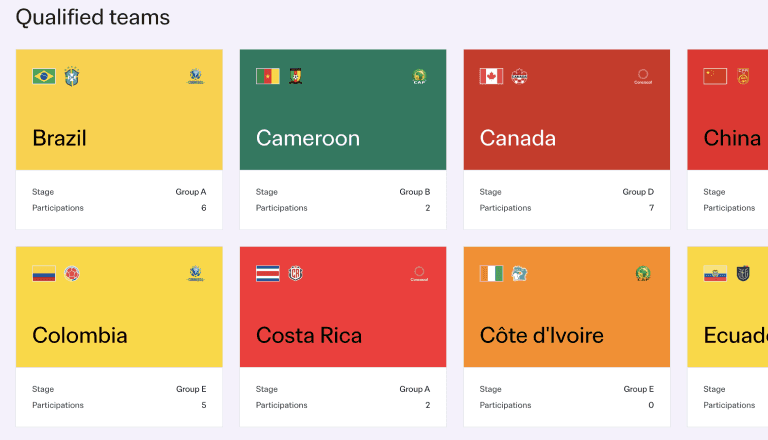

FIFA
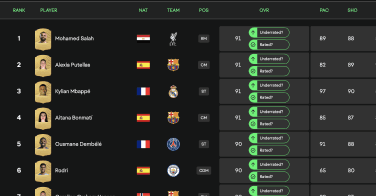
Simple visuals (cards for team qualification, tables for rankings).
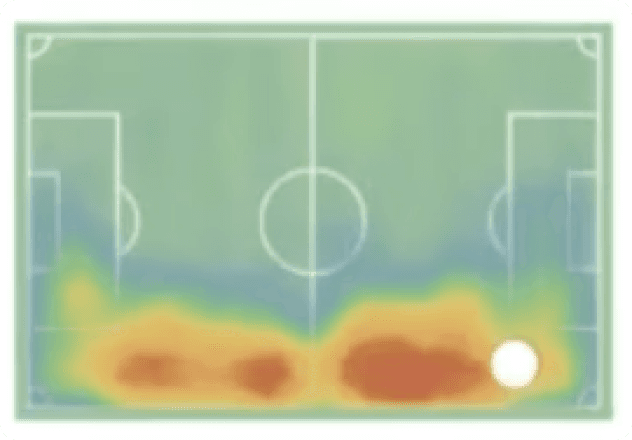
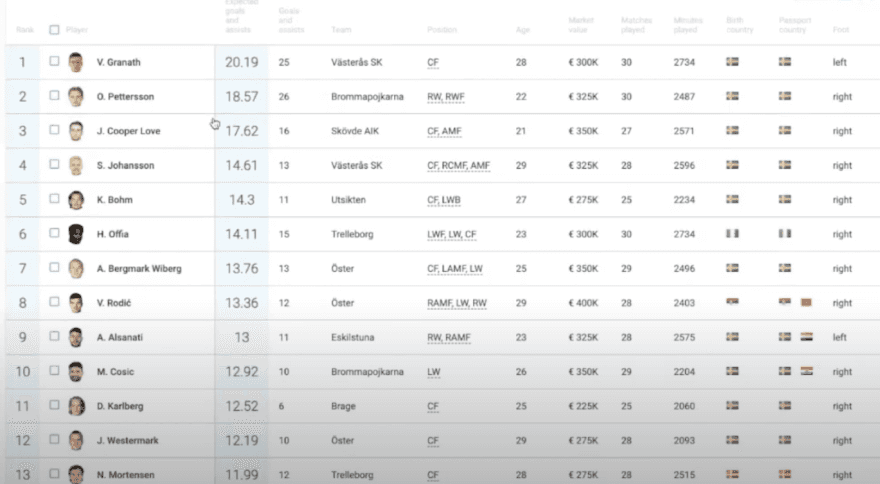
Wyscout / Win Factory
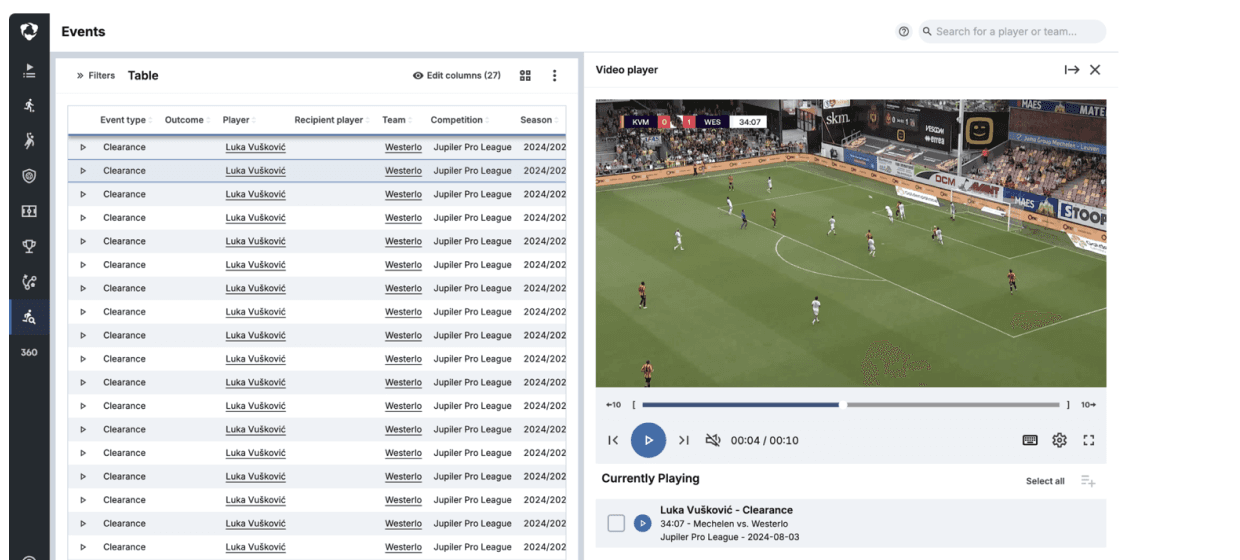
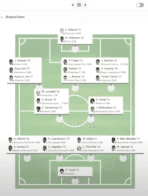
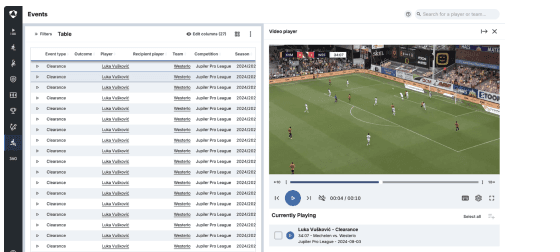
Heat maps, passing networks, shot maps, comparative tables linked to video clips.
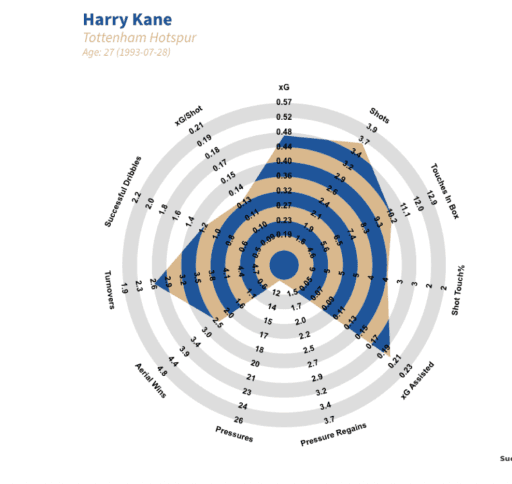
StatsBomb

Types of Visualization
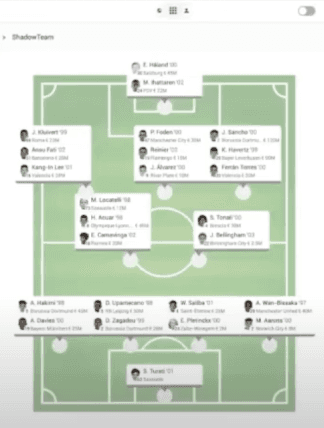
Advanced visuals (radars, spider charts, positional/passing maps).
Audience & Purpose
Different platforms serve different audiences, from analysts to fans
Wyscout, Win Factory, StatsBomb support performance analysis and decision-making
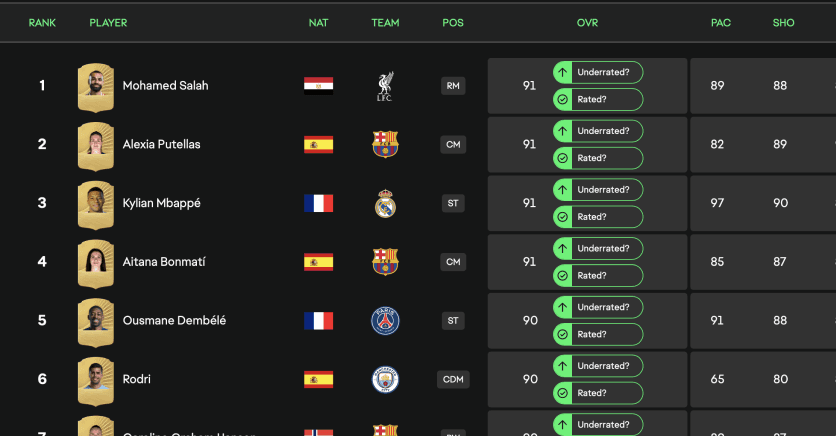
Flourish, EA FC 26, and DVP focus on simplified visuals, ratings, and general data tools
Clarity & Readability
FIFA uses bright colors, clean fonts, and simple standings for easy readability.
Wyscout / StatsBomb are professional and data-heavy, with a steeper learning curve.
Flourish is the most intuitive and visual, while Win Factory is simple but can feel cluttered when overloaded.
Wyscout / StatsBomb
Advanced interactivity with filters, comparisons, and video integration.
EA FC 26
Solid filters (leagues, teams, attributes) but navigation/search could improve.
Interactivity

Takeaways
Balance Power & Simplicity
Striking Visuals
Skill Tags & Summaries
Avoid Clutter
FIFA
Simple visuals (cards for team qualification, tables for rankings).
Wyscout / Win Factory
Heat maps, passing networks, shot maps, comparative tables linked to video clips.
StatsBomb
Types of Visualization
Advanced visuals (radars, spider charts, positional/passing maps).
Audience & Purpose
Different platforms serve different audiences, from analysts to fans
Wyscout, Win Factory, StatsBomb support performance analysis and decision-making
Flourish, EA FC 26, and DVP focus on simplified visuals, ratings, and general data tools
Clarity & Readability
FIFA uses bright colors, clean fonts, and simple standings for easy readability.
Wyscout / StatsBomb are professional and data-heavy, with a steeper learning curve.
Flourish is the most intuitive and visual, while Win Factory is simple but can feel cluttered when overloaded.
Wyscout / StatsBomb
Advanced interactivity with filters, comparisons, and video integration.
EA FC 26
Solid filters (leagues, teams, attributes) but navigation/search could improve.
Interactivity
Takeaways
Balance Power & Simplicity
Striking Visuals
Skill Tags & Summaries
Avoid Clutter
FIFA
Simple visuals (cards for team qualification, tables for rankings).
Wyscout / Win Factory
Heat maps, passing networks, shot maps, comparative tables linked to video clips.
StatsBomb
Types of Visualization
Advanced visuals (radars, spider charts, positional/passing maps).
Audience & Purpose
Different platforms serve different audiences, from analysts to fans
Wyscout, Win Factory, StatsBomb support performance analysis and decision-making
Flourish, EA FC 26, and DVP focus on simplified visuals, ratings, and general data tools
Clarity & Readability
FIFA uses bright colors, clean fonts, and simple standings for easy readability.
Wyscout / StatsBomb are professional and data-heavy, with a steeper learning curve.
Flourish is the most intuitive and visual, while Win Factory is simple but can feel cluttered when overloaded.
Wyscout / StatsBomb
Advanced interactivity with filters, comparisons, and video integration.
EA FC 26
Solid filters (leagues, teams, attributes) but navigation/search could improve.
Interactivity
Takeaways
Balance Power & Simplicity
Striking Visuals
Skill Tags & Summaries
Avoid Clutter
FIFA
Simple visuals (cards for team qualification, tables for rankings).
Wyscout / Win Factory
Heat maps, passing networks, shot maps, comparative tables linked to video clips.
StatsBomb
Types of Visualization
Advanced visuals (radars, spider charts, positional/passing maps).
Audience & Purpose
Different platforms serve different audiences, from analysts to fans
Wyscout, Win Factory, StatsBomb support performance analysis and decision-making
Flourish, EA FC 26, and DVP focus on simplified visuals, ratings, and general data tools
Clarity & Readability
FIFA uses bright colors, clean fonts, and simple standings for easy readability.
Wyscout / StatsBomb are professional and data-heavy, with a steeper learning curve.
Flourish is the most intuitive and visual, while Win Factory is simple but can feel cluttered when overloaded.
Wyscout / StatsBomb
Advanced interactivity with filters, comparisons, and video integration.
EA FC 26
Solid filters (leagues, teams, attributes) but navigation/search could improve.
Interactivity
Takeaways
Balance Power & Simplicity
Striking Visuals
Skill Tags & Summaries
Avoid Clutter
Radar chart for Coach
FIFA
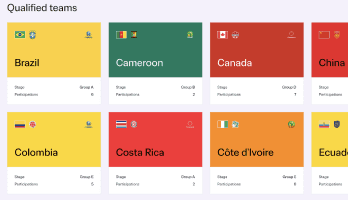
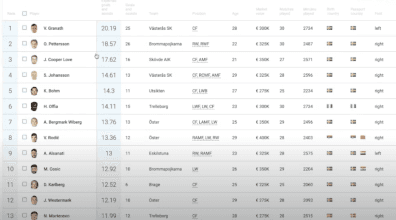
Simple visuals (cards for team qualification, tables for rankings).
Wyscout / Win Factory
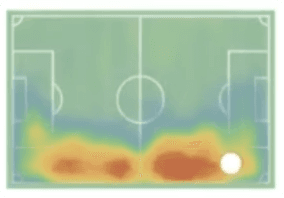
Heat maps, passing networks, shot maps, comparative tables linked to video clips.
StatsBomb
Types of Visualization
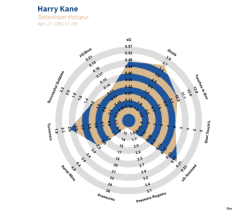
Advanced visuals (radars, spider charts, positional/passing maps).
Audience & Purpose
These platforms serve different audiences and purposes.
Wyscout, Win Factory, and StatsBomb are mainly for coaches, scouts, and analysts, helping them study performance and make data-driven decisions.
Flourish and EA FC 26 are aimed more at fans and journalists, making soccer data easier to understand through visuals or player ratings.
DVP is broader, offering general tools for anyone who needs charts or visualizations.
Clarity & Readability
Most of the platforms are designed to be clear and visually appealing, but they differ in complexity.
FIFA → Bright colors, clean fonts, easy-to-read standings.
Wyscout / StatsBomb → Professional and modern, but feature-heavy (steeper learning curve).
Win Factory → Simple, but risks clutter when overloaded.
Flourish → Highly intuitive, colorful, animated visuals for broad audiences.
Wyscout / StatsBomb
Advanced interactivity with filters, comparisons, and video integration.
EA FC 26
Solid filters (leagues, teams, attributes) but navigation/search could improve.
Interactivity
Takeaways
Balance Power & Simplicity
Striking Visuals
Skill Tags & Summaries
Avoid Clutter
FIFA
Simple visuals (cards for team qualification, tables for rankings).
Wyscout / Win Factory
Heat maps, passing networks, shot maps, comparative tables linked to video clips.
StatsBomb
Types of Visualization
Advanced visuals (radars, spider charts, positional/passing maps).
Audience & Purpose
These platforms serve different audiences and purposes.
Wyscout, Win Factory, and StatsBomb are mainly for coaches, scouts, and analysts, helping them study performance and make data-driven decisions.
Flourish and EA FC 26 are aimed more at fans and journalists, making soccer data easier to understand through visuals or player ratings.
DVP is broader, offering general tools for anyone who needs charts or visualizations.
Clarity & Readability
Most of the platforms are designed to be clear and visually appealing, but they differ in complexity.
FIFA → Bright colors, clean fonts, easy-to-read standings.
Wyscout / StatsBomb → Professional and modern, but feature-heavy (steeper learning curve).
Win Factory → Simple, but risks clutter when overloaded.
Flourish → Highly intuitive, colorful, animated visuals for broad audiences.
Wyscout / StatsBomb
Advanced interactivity with filters, comparisons, and video integration.
EA FC 26
Solid filters (leagues, teams, attributes) but navigation/search could improve.
Interactivity
Takeaways
Balance Power & Simplicity
Striking Visuals
Skill Tags & Summaries
Avoid Clutter
FIFA
Simple visuals (cards for team qualification, tables for rankings).
Wyscout / Win Factory
Heat maps, passing networks, shot maps, comparative tables linked to video clips.
StatsBomb
Types of Visualization
Advanced visuals (radars, spider charts, positional/passing maps).
Audience & Purpose
These platforms serve different audiences and purposes.
Wyscout, Win Factory, and StatsBomb are mainly for coaches, scouts, and analysts, helping them study performance and make data-driven decisions.
Flourish and EA FC 26 are aimed more at fans and journalists, making soccer data easier to understand through visuals or player ratings.
DVP is broader, offering general tools for anyone who needs charts or visualizations.
Clarity & Readability
Most of the platforms are designed to be clear and visually appealing, but they differ in complexity.
FIFA → Bright colors, clean fonts, easy-to-read standings.
Wyscout / StatsBomb → Professional and modern, but feature-heavy (steeper learning curve).
Win Factory → Simple, but risks clutter when overloaded.
Flourish → Highly intuitive, colorful, animated visuals for broad audiences.
Wyscout / StatsBomb
Advanced interactivity with filters, comparisons, and video integration.
EA FC 26
Solid filters (leagues, teams, attributes) but navigation/search could improve.
Interactivity
Takeaways
Balance Power & Simplicity
Striking Visuals
Skill Tags & Summaries
Avoid Clutter
FIFA
Simple visuals (cards for team qualification, tables for rankings).
Wyscout / Win Factory
Heat maps, passing networks, shot maps, comparative tables linked to video clips.
StatsBomb
Types of Visualization
Advanced visuals (radars, spider charts, positional/passing maps).
Audience & Purpose
These platforms serve different audiences and purposes.
Wyscout, Win Factory, and StatsBomb are mainly for coaches, scouts, and analysts, helping them study performance and make data-driven decisions.
Flourish and EA FC 26 are aimed more at fans and journalists, making soccer data easier to understand through visuals or player ratings.
DVP is broader, offering general tools for anyone who needs charts or visualizations.
Clarity & Readability
Most of the platforms are designed to be clear and visually appealing, but they differ in complexity.
FIFA → Bright colors, clean fonts, easy-to-read standings.
Wyscout / StatsBomb → Professional and modern, but feature-heavy (steeper learning curve).
Win Factory → Simple, but risks clutter when overloaded.
Flourish → Highly intuitive, colorful, animated visuals for broad audiences.
Wyscout / StatsBomb
Advanced interactivity with filters, comparisons, and video integration.
EA FC 26
Solid filters (leagues, teams, attributes) but navigation/search could improve.
Interactivity
Takeaways
Balance Power & Simplicity
Striking Visuals
Skill Tags & Summaries
Avoid Clutter
Design
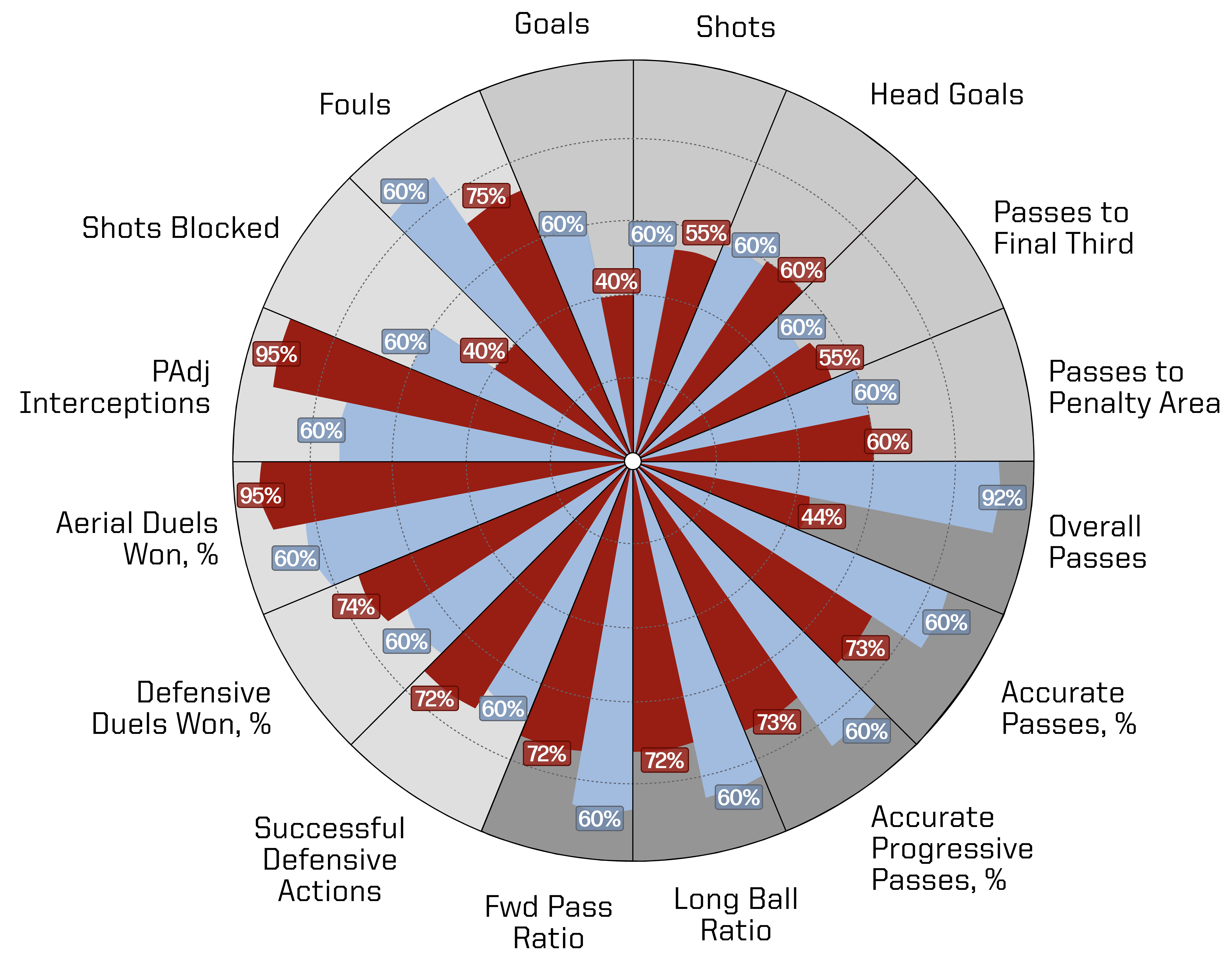
Image of what the coach wanted
What we designed
The high number of metrics made the visualization overwhelming.
The circular form reduced clarity between values and segments.
Overall, the chart became difficult to read and interpret quickly.
Initial Direction
Challenges
Design Takeaways
Iteration: Simplifying the System
Human Made Design
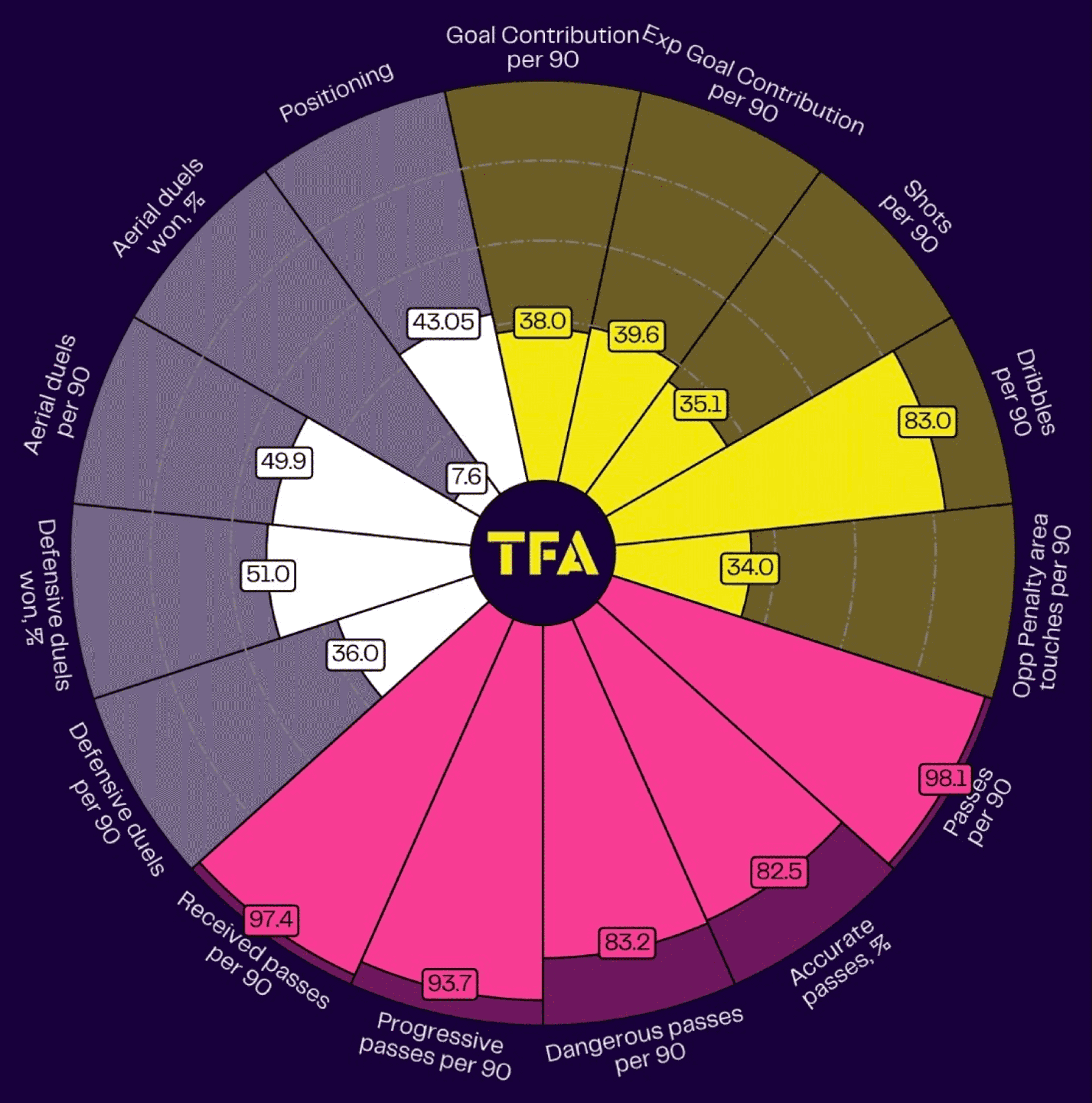
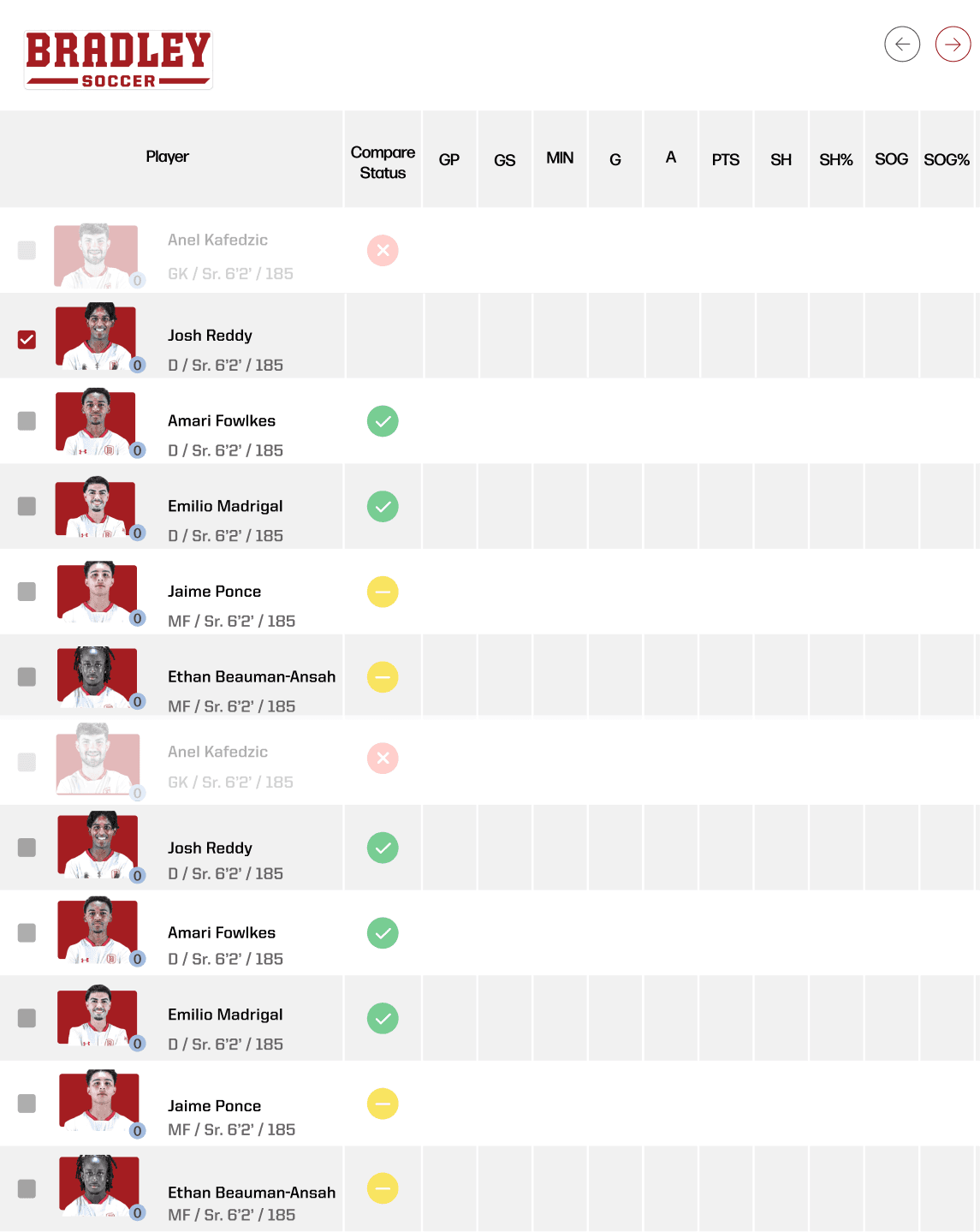
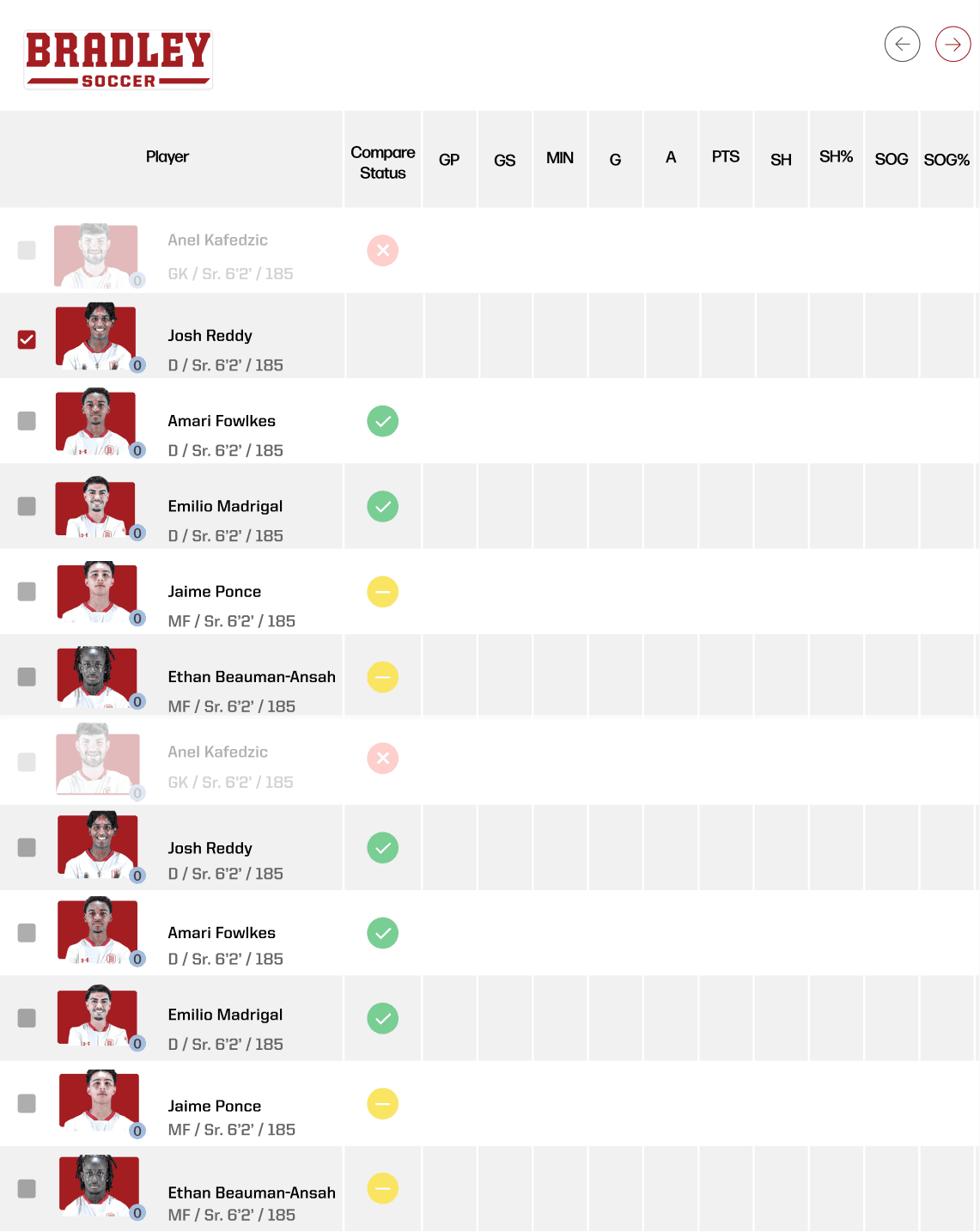
Reduced 16 metrics into three categories (Possession, Attacking, Defending).
Limited each view to 5-6 key metrics for clarity.
Included toggle functionality to switch between player views.


Player
Team
Conference
Reports & Downloads
Admin
Team
Player
Admin
Conference
Reports & Downloads

50%
20%
60%
41%
80%
60%
30%
45%
77%
83%
Passes
Accurate Passes
Accurate Progressive Passes
Long Ball Ration
Fwd Ball Ration

Josh R.
Class: Sophomore
Height: 6’3
Weight: 195
Position: Center Back
Total
0
0
0
0
0
Goals
Category (Per 90 minutes)
Shots
Head Goals
Passes to final third
Passes to penalty area
Defending
Attacking
Possesion

Player
Team
Conference
Reports & Downloads
Admin
Team
Player
Admin
Conference
Reports & Downloads

50%
20%
60%
41%
80%
60%
30%
45%
77%
83%
Passes
Accurate Passes
Accurate Progressive Passes
Long Ball Ration
Fwd Ball Ration
Josh R.
Class: Sophomore
Height: 6’3
Weight: 195
Position: Center Back
Total
0
0
0
0
0
Goals
Category (Per 90 minutes)
Shots
Head Goals
Passes to final third
Passes to penalty area
Added a table beneath the radar for detailed stats.
Enabled player comparison, with indicator for compatibility across positions.
With the rise of AI in design, I explored whether it could replicate and evolve a human-designed radar chart.
Final output show here (Prompt 3 of 3)
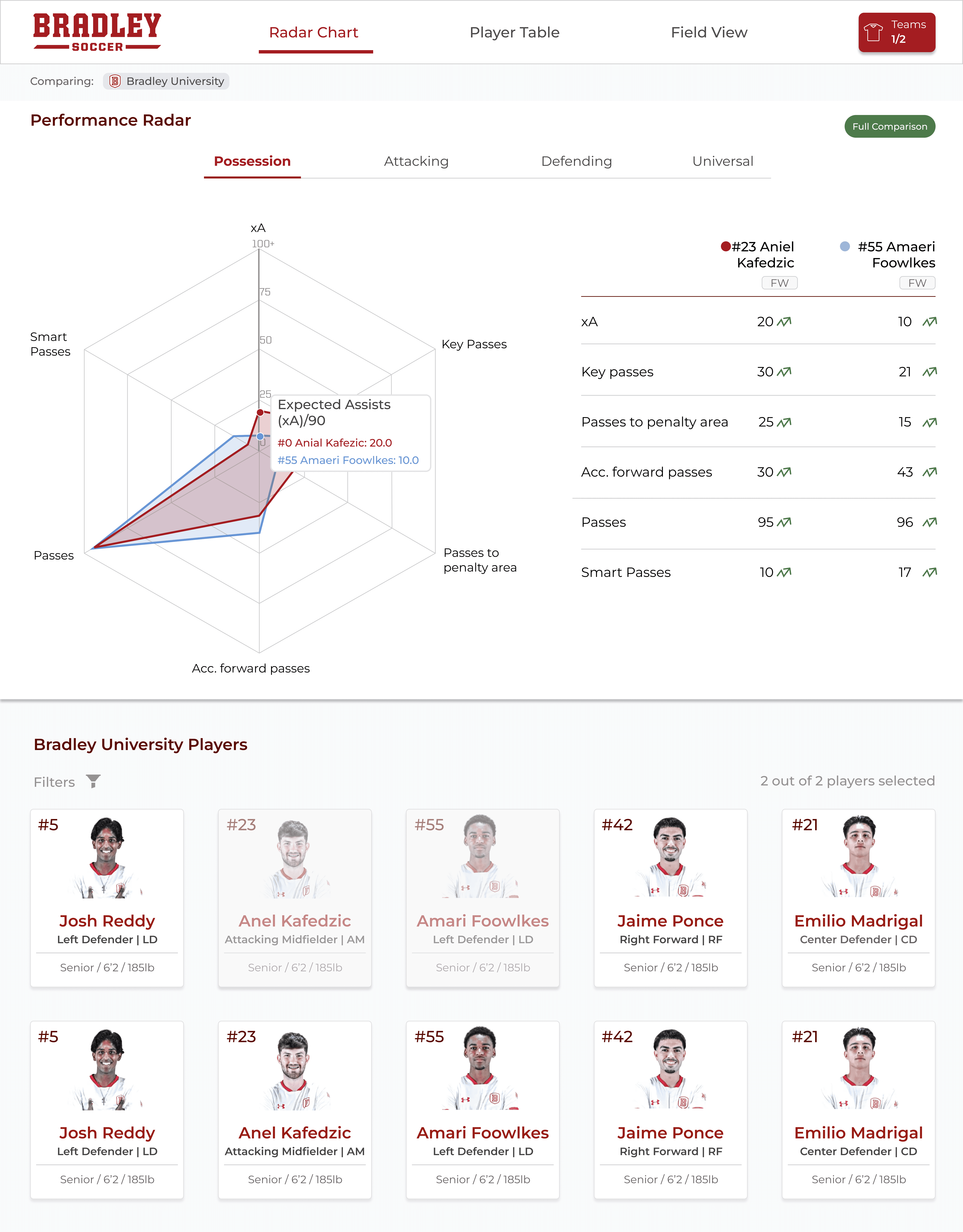
Building on these insights, I combined the most effective elements from both approaches to create a more intuitive and refined final radar chart.
Human approach focused on reducing effort and improving flow.
AI expanded functionality, but often at the cost of usability and efficiency.
Best solution came from selectively refining AI-generated ideas.
Reinforced that AI supports exploration, while designers drive decision-making and clarity.
AI - Assist Exploration
Final Design (Refined Radar)
Replaced the circular form with a structured polygon, making comparisons easier to read.
Introduced side-by-side player views instead of toggling.
Added hover interactions for precise metric visibility.
Moved detailed stats to a separate view, reducing on-screen clutter.
Designed player cards with clear hierarchy (name, number, position, physical attributes) for quick context.
See it all in Figma
Want to view the first place wireframes? Click the button below to be taken to the design file!
Refining the Route Forward
The high number of metrics made the visualization overwhelming.
The circular form reduced clarity between values and segments.
Overall, the chart became difficult to read and interpret quickly.
Image 1: What the coach wanted
Image 2: What we Designed
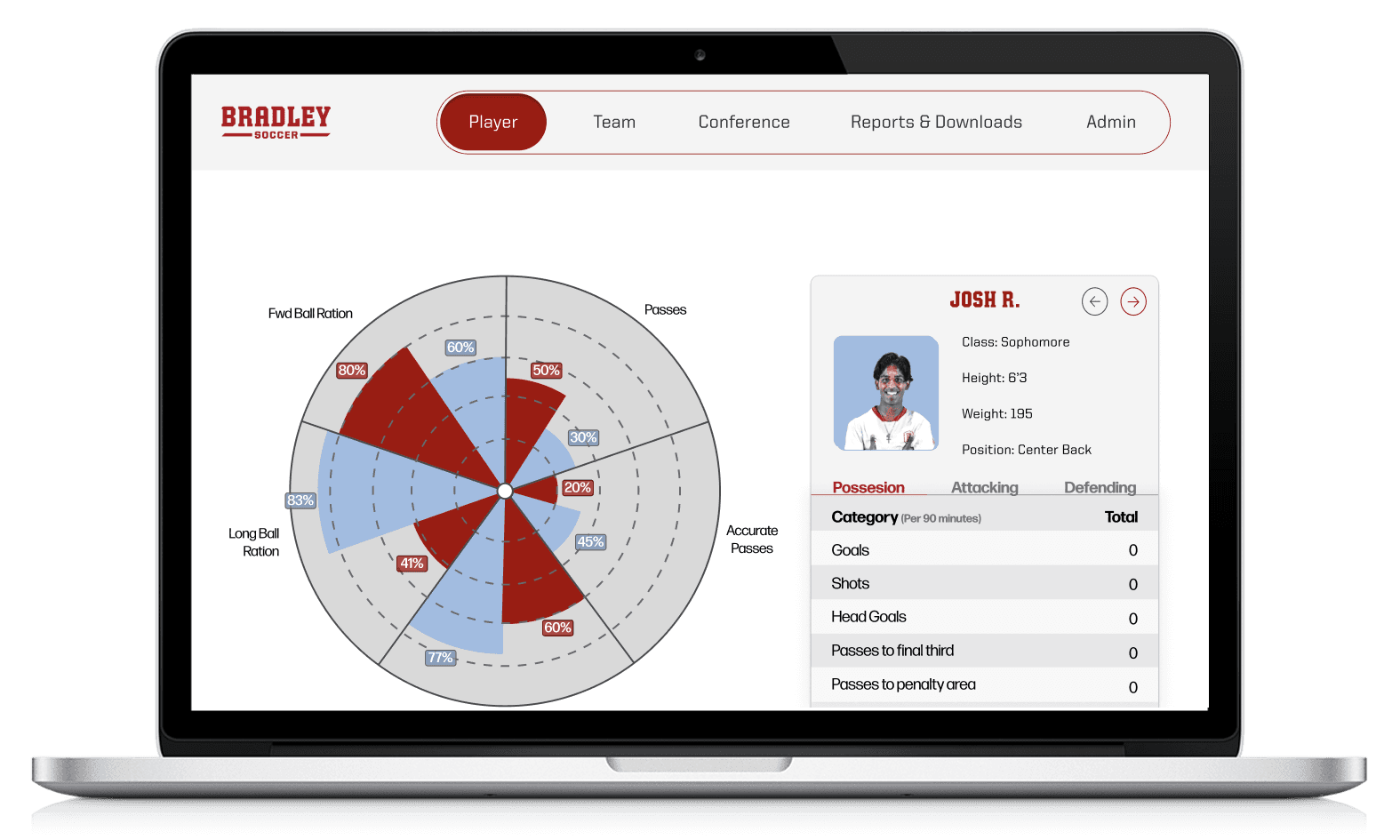
Reduced 16 metrics into three categories (Possession, Attacking, Defending).
Limited each view to 5-6 key metrics for clarity.
Included toggle functionality to switch between player views.
Refining the Route Forward
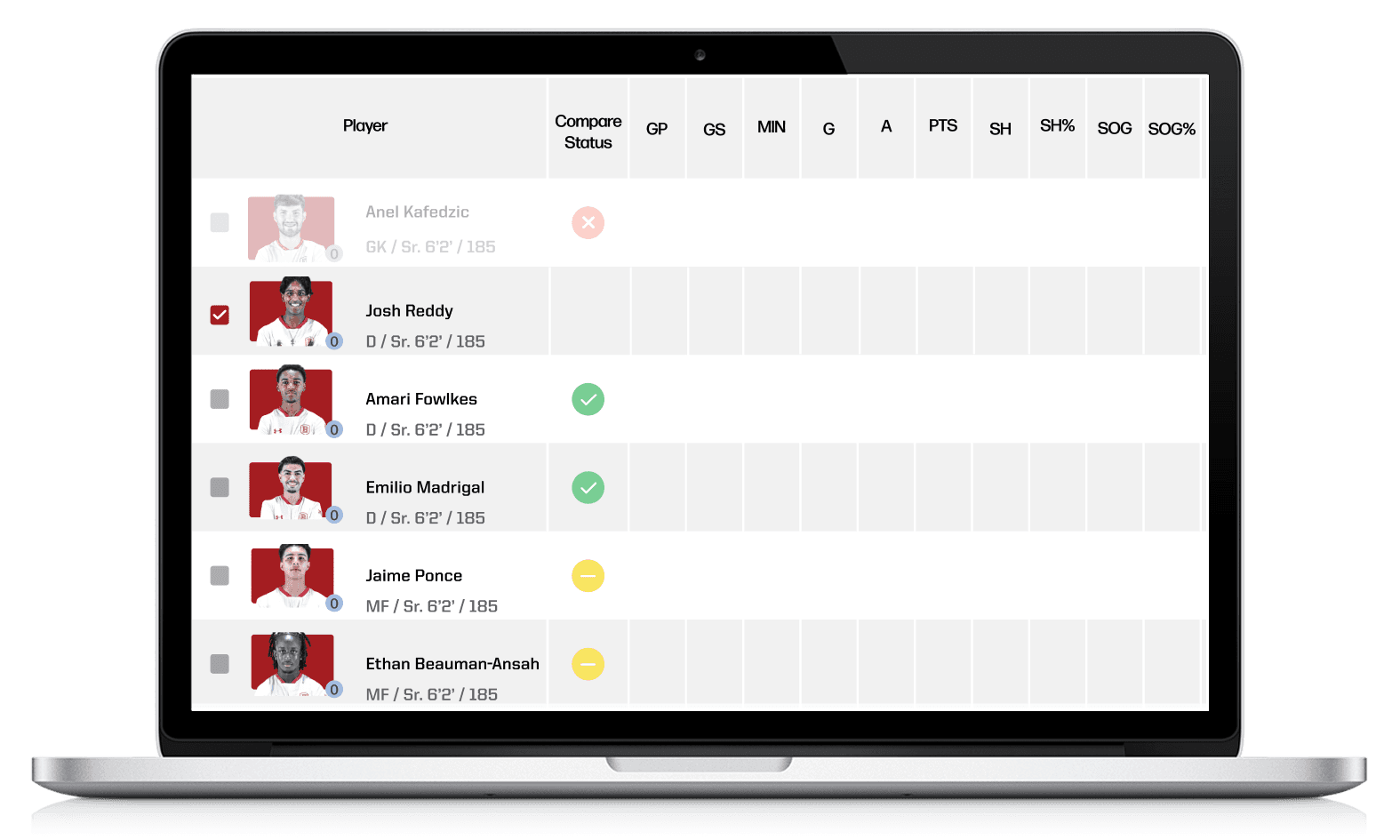
Added a table beneath the radar for detailed stats.
Enabled player comparison, with indicator for compatibility across positions.
AI - Assist Exploration
With the rise of AI in design, I explored whether it could replicate and evolve a human-designed radar chart.
Final output show here (Prompt 3 of 3)
Design Takeaways
Human approach focused on reducing effort and improving flow.
AI expanded functionality, but often at the cost of usability and efficiency.
Best solution came from selectively refining AI-generated ideas.
Reinforced that AI supports exploration, while designers drive decision-making and clarity.
Building on these insights, I combined the most effective elements from both approaches to create a more intuitive and refined final radar chart.
Final Design (Refined Radar)
Replaced the circular form with a structured polygon, making comparisons easier to read.
Introduced side-by-side player views instead of toggling.
Added hover interactions for precise metric visibility.
Moved detailed stats to a separate view, reducing on-screen clutter.
Designed player cards with clear hierarchy (name, number, position, physical attributes) for quick context.
See it all in Figma
Want to view the first place wireframes? Click the button below to be taken to the design file!
Challenges
Impact
Final Solution
Impact
Lessons Learned
Next Steps
Expand the concept into a full dashboard, including homepage, player tables, and game insights. Further develop interaction patterns, user flows, and data-driven features to create a more complete and scalable experience.
Destination Reached
Simplified the radar chart into a clear, comparison-focused tool by reducing metrics, organizing them into key categories, and improving overall readability, balancing coach preferences with player usability.
Collaborated with the computer science team to translate design into build-ready solutions, gaining experience designing for real data environments.
.
Delivered a more usable alternative to the team’s existing tools, supporting clearer and more efficient player analysis.
Leading the team required balancing different design approaches while maintaining a cohesive direction.
I learned how to guide decisions through constructive feedback and questions, rather than control, while recognizing the importance of encouraging stronger design thinking across the team.
Final Solution
Collaborated with the computer science team to translate design into build-ready solutions, gaining experience designing for real data environments .
.
Delivered a more usable alternative to the team’s existing tools, supporting clearer and more efficient player analysis.
Next Steps
Impact
Where do you want
to go?
Let's find the next destination for great design together!
Where do you want
to go?
Let's find the next destination for great design together!